I'm leaving social media. Not a hiatus or a strategic retreat. A permanent ending.
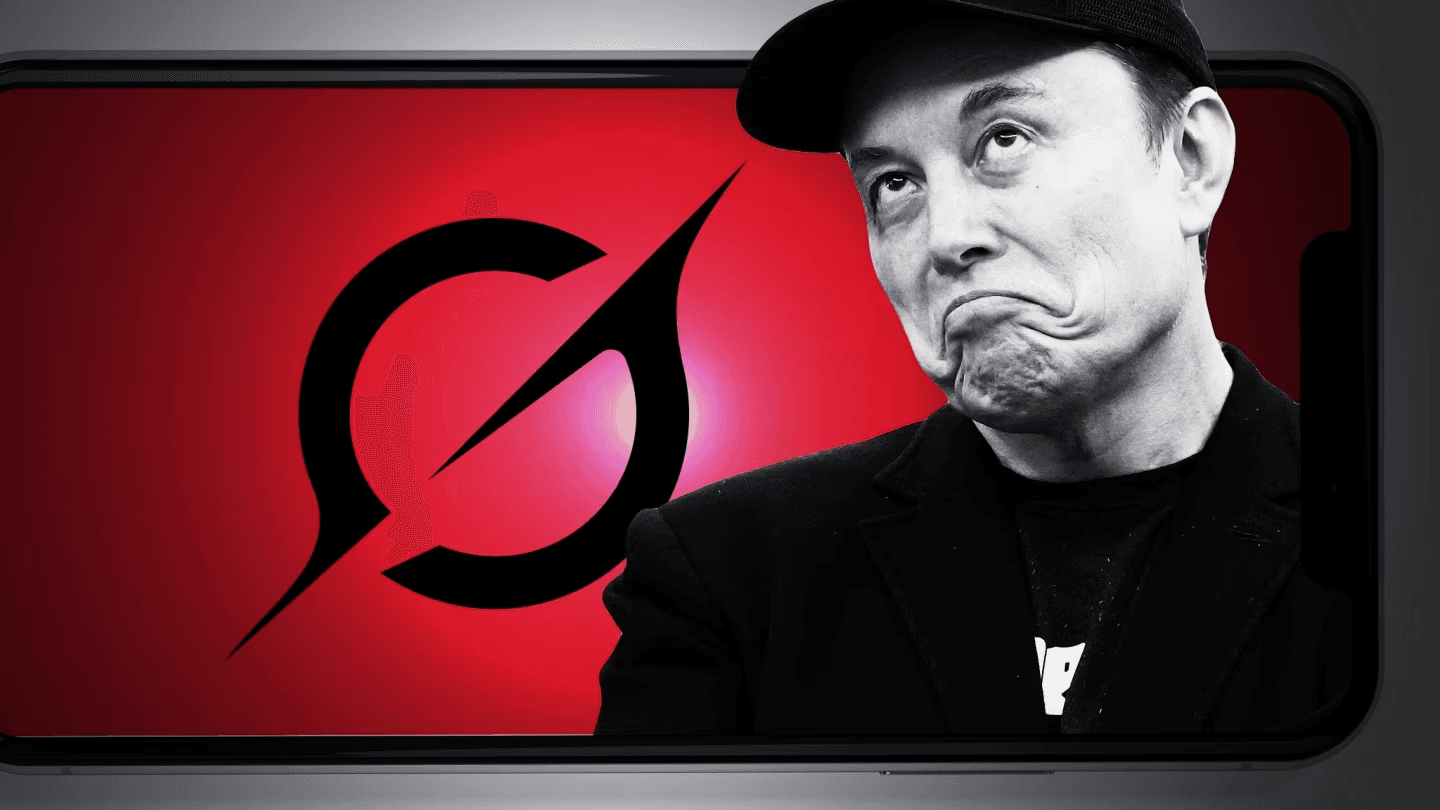
This essay is an attempt to explain why, and to be honest about what took me so long. It's about Mark Fisher and the blogosphere, about what we lost when we traded open protocols for platform capitalism, about the brief moment right at the beginning when I genuinely believed social media could change the world. It's about the years I spent in advertising, laundering reputations and commodifying causes I cared about, telling myself I was one of the good ones. It's about watching Elon Musk respond to the mass non-consensual sexualisation of women and children with laugh-cry emojis, and finally admitting that I can no longer separate my personal presence on these platforms from my professional complicity in them.
I will continue to study and research these spaces; that work matters. But I will no longer promote them, optimise for their algorithms, or help clients build audiences there. The cognitive dissonance has become unsustainable. More than that: it has become dishonest. I'm done.
*
I turned thirty on a plane, alone, flying to Asia as an emigré. Mark Fisher took his own life at some point while I was on that flight. I found out after I landed, scrolling Twitter as I waited for a taxi to take me to meet some strangers who would eventually become some of my closest friends. I cried softly to myself in the back of that taxi; to this day I'm not entirely sure why. It could have been tiredness, or an awareness that I would not see my family for many months. But most likely, it was an emotional response to the surprising sense of grief I was feeling: the loss of a person who had cast a long shadow over my life without ever even knowing who I was.
I pulled myself together quickly, if nothing else because how do you even begin to explain to strangers that you've shed tears over the death of someone you've never met outside of the body of work they produced?
In a few days, it will be the ninth anniversary of Fisher's death. Coincidentally, it will also be my thirty-ninth birthday. I've been thinking about this conjunction more than usual this year, because I've been thinking about what it means to participate in public life online, about the forms that participation has taken and the forms it might yet take, and about why I've decided to leave the platforms that have structured so much of my professional and intellectual existence for most of my adult life.
This is my departure from social media. Not a pause, not a strategic retreat, but a permanent ending.
*
I was a teenager when I first encountered Mark, though I had no idea who he was at the time, operating as he was under his blogging pseudonym K-Punk. My decision to study philosophy, my particular obsession with technology and politics; these were shaped in no small part by the community of bloggers and thinkers of which he was a part, what would eventually coalesce around the CCRU. My taste in music was formed here too, by Kode9 and drum and bass and the early, visionary sounds that would become dubstep. (Fisher's writing on Burial, one of my favourite artists, is etched into my brain.) Later, when I left Singapore to return to academia, it was Goldsmiths, his alma mater, that drew me back; culture studies, naturally. Then King's, to study under Mark's own student and colleague Nick Srnicek. I take great pleasure and pride in being only two steps away from Mark academically, which is balanced out by more than a little shame in being three steps from Nick Land. But that's a whole other story.
The question of why Fisher's death affected me so profoundly (when the deaths of other thinkers who shaped me equally have not) becomes clearer when we turn to Lauren Berlant's concept of the intimate public. In The Female Complaint, Berlant argues that certain cultural forms create spaces where strangers feel they're experiencing the same emotional world, processing the same inchoate feelings, often before those feelings have been properly named or politicised. The intimate public offers, in their words, 'a sense of belonging to a community held together by shared affect rather than shared ideology.'
K-Punk functioned precisely as this kind of intimate public. Fisher was articulating a structure of feeling that his readers were already living but couldn't name. Concepts like Hauntology or The Slow Cancellation Of The Future or Capitalist Realism gave language to something we were already feeling in our bones. When you read Deleuze, you encounter a finished edifice; when you followed K-Punk, you were watching someone think in something approaching real-time.
In a sense, parasocial relationships aren't really about the parasocial object at all, but rather the self that forms in relation to that object. Fisher's writing offered a way of being in the world, a structure of feeling that you could inhabit. The melancholic, the politically committed, the person who refuses to accept that the foreclosure of the future is natural or inevitable.
What made the blogosphere different from what came after wasn't simply that it was text-based or pseudonymous or countercultural (though it was all of these). Rather it was the specific temporality of the relationship it created and the scale at which it operated. The blogosphere was large enough to feel like public discourse yet small enough that participation was genuinely meaningful. Looking back through the internet archive at the blogs I used to read, it is clear that anyone, myself included, could have commented on K-Punk and received a thoughtful response. This possibility (even if never actualised personally, I was too young and too insecure) structures the relationship differently than contemporary platform parasociality, where the asymmetry is total.
Blogs unfolded over years, with posts days or weeks apart. Readers lived with the ideas, returned to them, let them grow. This is fundamentally different from the temporal regime of social media, which demands constant presence but produces only shallow engagement; you're always encountering, never dwelling. The parasocial relationships this produces are correspondingly frantic, constantly refreshed but never deepened.
There's also the question of how you arrived. My encounter with K-Punk was driven by genuine interest, word of mouth, hyperlinks from adjacent blogs; what we might call social discovery in the old sense. Platform parasociality is algorithmically constructed; the TikToker in your feed is there because the platform decided you should see them, based on calculations designed to maximise engagement rather than to foster genuine intellectual or affective community. This doesn't make the attachment less real, but it does make it differently structured. It is, by its nature, more contingent, more interchangeable and more susceptible to the platform's commercial imperatives.
Indeed commerce itself is at the core here. The contemporary parasocial economy (Twitch streamers, YouTubers, Substackers) has made the production of parasocial attachment into an explicit business model. When intimacy becomes a commodity, it doesn't stop being intimacy exactly, but it becomes impossible to be naive about what's happening. The blogosphere's gift economy (people writing for free or for each other or for the sheer love of discourse) created different conditions for attachment. There was no subscription tier and no Patreon, no monetised relationship between writer and reader. The intimacy was genuinely given, not sold.
*
I want to be careful here, because nostalgia is a trap and I've already invoked Fisher's name, which makes the irony of romanticising lost digital futures a bit too on the nose. The blogosphere clearly wasn’t paradise. It had its own exclusions and hierarchies, and as anyone with a livejournal will know, it had its own capacity for cruelty. But even within this, it operated by a different set of logics, and those logics mattered.
I first encountered the internet when people like Cory Doctorow and Richard Stallman were encoding their values into it. I was an advocate for the free software movement and I believe wholeheartedly in the open web. The idea that protocols should be open, that data should be portable, that the network itself was a commons to be stewarded rather than a resource to be extracted. These positions were, for a moment, something like the default ideology of the people building the infrastructure. The early web was chaotic and ugly and often stupid, but it was ours in a way that's difficult to convey to anyone who came of age after the enclosure.
What we now call Web 2.0 (a term I've always hated, but which has the virtue of marking a tangible rupture) was the moment when a different set of values began to take hold. Web 2.0 marks the shift from protocols to platforms, from open standards to walled gardensm, and from interoperability to lock-in. As a colleague once put it, it was the moment that we moved from the web as commons to the web as real estate.
Nick Srnicek's work on platform capitalism lays out the logic with his usual clarity. Platforms position themselves as intermediaries, neutral infrastructure connecting users to services and producers to consumers and people to each other. This positioning obscures what they actually do; extract rent from interactions they did not create, capture data from relationships they merely facilitate, and leverage network effects to achieve the kind of monopoly power that makes exit progressively more costly. The platform doesn't produce anything; it encloses the productive activity of others and charges for access to what was once freely given.
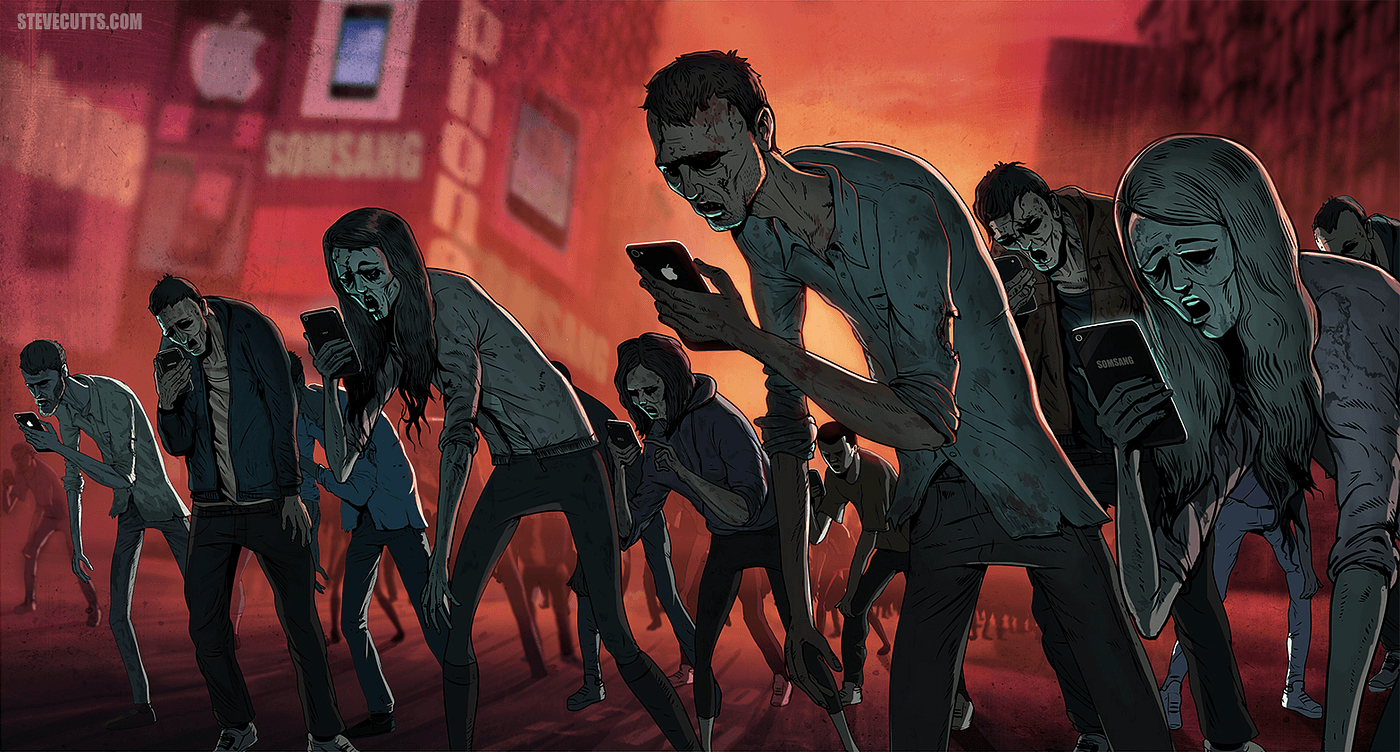
This is the structural flaw that makes everything else possible. It wasn't Musk who broke social media; Musk simply revealed what was always latent in the architecture. When your business model depends on capturing attention and converting it into data and your growth depends on making exit costly; when your profitability depends on inserting yourself into every possible human interaction and extracting a toll, you have built a machine that will, inevitably, be used for harm. The specific harms vary (misinformation, radicalisation, mental health crises among teenagers, the non-consensual sexualisation of women and children) but the underlying logic is constant: extract value, externalise costs, grow at all costs, make leaving impossible.
*
I started working in this industry at precisely the moment when platform capitalism was consolidating its victory. Facebook had just opened to the British public and Twitter was barely a few years old. The iPhone still wasn’t capable of copy and paste. The infrastructure of extraction was being assembled in real-time, and I walked right into it, convinced that I could help shape it toward better ends.
Why? It seems silly now, but all of this was happening at a moment of deep and profound social importance. Tahrir Square; Occupy Wall Street; The hashtagged revolution. I watched protesters coordinate in real-time, watched citizen journalism circumvent state media, watched movements coalesce across borders with a speed and fluidity that felt genuinely unprecedented. There is (as there always is) an XKCD comic from the time that sticks in my mind about the speed of a tweet outpacing the seismic shifts of an earthquake. And that felt powerful. The platforms weren't incidental to these uprisings; they felt constitutive of them, the technological substrate of a new kind of politics.
I believed in this. Deeply, perhaps naively, but genuinely. I truly believed that networked publics could route around the gatekeepers, that horizontal communication could challenge hierarchical power, that the tools of connection could become tools of liberation, not least because tools of communication have always done so historically. When I chose to work in social media (and it was a choice, a career decision made with intent) it was because I thought I could help shape the contours of these spaces in ways that mattered. Not from some messianic delusion about my own importance, but from a sense that the work of building and maintaining digital publics was political work; the people who understood these platforms had some obligation to push them toward their better possibilities.
This seems almost embarrassingly earnest now. The Arab Spring gave way to authoritarian consolidation. Occupy dissolved, its energy dispersed into a thousand smaller struggles. The platforms that had seemed to enable new forms of collective action turned out to be even better at enabling surveillance capitalism, algorithmic radicalisation, and the industrialised manufacture of resentment. The tools of connection became tools of extraction. The revolution was monetised, and then the revolution was over.
The cruel irony is that everything I've just described about platform capitalism was already visible at that time, if you knew where to look. Srnicek's book wouldn't be published for five years after the Arab spring, but the dynamics he describes were already operational. I could have seen it. In some sense I did see it. I just chose to believe that the liberatory potential outweighed the extractive architecture, that we could build something good on foundations designed for extraction. This was, in retrospect, a fantasy; but it was a fantasy that allowed me to keep going, and so I held onto it long past the point where honesty would have required letting go.
The tragedy (or perhaps the comedy; it's hard to tell from inside) is that so many of us told ourselves the same story. We were connecting people, not building surveillance infrastructure! We were democratising communication, not creating addiction machines! The language of openness and connection and democratisation was everywhere, even as the reality of enclosure and extraction and monopolisation became impossible to ignore. Of course, this all falls apart when I remember the long, involved discussions with colleagues around ideas like gamification. The intellectual gymnastics were real.
I don't want to let Musk off the hook. What he has done to Twitter is genuinely exceptional in its recklessness and cruelty. But I also don't want to pretend that the platforms were fine before he arrived, that there was some golden age of ethical social media that one bad actor ruined. The platforms were always extractive. They were always building toward monopoly. They were always going to be captured by whoever had the most money and the fewest scruples, because that is what the architecture incentivises. Musk didn't break the machine, he just showed us what it was always capable of.
*
I have spent nearly two decades working in and around social media. It is, in a very real sense, what I do. I have advised brands on platform strategy, conducted research into digital communities, built campaigns designed to capture attention and convert it into value. My professional identity and my presence on these platforms are not separate things; they are braided together so tightly that pulling one affects the other.
I cannot continue to maintain a personal presence on platforms whose ethics I find abhorrent while simultaneously advising clients on how to succeed there. I cannot scroll past the wreckage in my personal feed and then, the next morning, help organisations build audiences in the same spaces. The cognitive dissonance has become unsustainable. More than that: it has become dishonest. And whatever else I want to be, I do not want to be dishonest.
So this is a professional departure as much as a personal one. I am done promoting these platforms. I am done optimising for their algorithms. I am done treating their metrics as meaningful measures of success. I am done pretending that 'meeting audiences where they are' is a neutral stance when 'where they are' is a space that enables the mass non-consensual sexualisation of women and children.
I want to be precise about what this means and what it doesn't. I will continue to study these platforms, to research them, to write about them critically. Understanding how they work, how they shape behaviour, how they structure contemporary life; this remains essential intellectual labour. You cannot critique what you refuse to examine. But there is a difference between studying something and promoting it, between analysis and advocacy, between understanding a system and helping it grow.
I have been on the wrong side of that line for too long. I am stepping back across it.
This will have professional consequences. I understand that. There are clients I will lose, opportunities that will close, a certain kind of career that will no longer be available to me. I have made my peace with this, or I am trying to. The alternative (continuing to build my livelihood on foundations I know to be rotten) has become a price I am unwilling to pay.
I also want to be clear about what this decision is and what it isn't.
It isn't a declaration of moral superiority. I've stayed on these platforms far longer than my own principles should have permitted, making the same rationalisations everyone makes. Worse: I've spent years helping others make those same rationalisations, packaging them in strategy decks and presenting them in boardrooms. I'm not better than anyone who remains; I'm simply, finally, unwilling to continue.
It isn't a prediction that social media will collapse, or that my departure will matter to anyone besides myself. These platforms will persist long after I've left them, and the attention economy will adapt as it always does. One person leaving changes nothing in aggregate. The point is that it changes something for me.
What it is, I think, is an attempt to return to something older, something slower, something more aligned with the conditions under which genuine intellectual community became possible in the first place. I'm keeping the blog. I'll still be writing, still be thinking in public, still be available to anyone who wants to engage with the work. But I'll be doing it in a space I control, at a tempo that allows for dwelling rather than mere encountering, in a form that doesn't require me to enrich people whose projects I find abhorrent.
*
Fisher wrote about the slow cancellation of the future, about how capitalist realism forecloses the possibility of imagining alternatives. One small thing I can do is refuse to participate in the infrastructure of that foreclosure. One small thing I can do is remember that there were other ways of being in public, and that perhaps there can be again.
Berlant writes that the intimate public offers 'the experience of belonging to a community even in the absence of actual contact with its members.' Fisher's death didn't end the community that K-Punk helped create; those of us who were shaped by that work carry something forward. This is what inheritance means: a carrying-on, a working-through, a refusal to let the structure of feeling dissipate entirely, even as we acknowledge its limits and failures.
I'll be thirty-nine in a few days. I've spent nearly a decade working through what Fisher's work meant to me, and what it means that he's gone. The grief has changed shape; it's less acute, more ambient, woven into the texture of how I think and write and teach. But it hasn't disappeared, and I don't think it should. To grieve is to acknowledge that something mattered.
The blogosphere mattered. The intimate publics we built there mattered. They shaped who we became. And somewhere, I'd like to think, someone is still finding their way to that work, still recognising something they couldn't name, still beginning to assemble a structure of feeling that will carry them forward.
That's what the blogosphere gave us. That's what we owe each other still. And it's why I'm going back to something like it, leaving behind the platforms that promised connection and delivered surveillance, that promised community and delivered commodity, that promised revolution and delivered Elon Musk laughing at pictures of undressed women.
You can find me at sudoculture.com. I'll be here, thinking slowly, writing when I have something to say. That will have to be enough.