I should apologise in advance for the length of this one. It's a bit heavy, even by my usual brevity-averse standards. But I think it's a pretty good read if you're in any way interested in technology policy, digital sovereignty, or the socioeconomics of baked goods.
TL;DR I spent some time in rural France, got slightly obsessed with the local bakeries, and ended up writing 6,000 words about what bread can teach Emmanuel Macron (and Keir Starmer, though he's not listening) about platform capitalism, anti-circumvention law, and why the internet tastes of nothing.
It starts with wolves, passes through the Chorleywood Bread Process, takes in a wood-fired sourdough bakery in a tiny village in the Vendée, and ends up arguing that France already has the model for digital sovereignty. They just haven't noticed it's been sitting on the counter the whole time.
If you happen to work in public policy (or a bakery, I guess) and find this compelling, then I'm available for work. Hit me up.
A few weeks ago, French prosecutors raided the Paris headquarters of Twitter as part of an expanded criminal investigation into the distribution of child sexual abuse material, sexually explicit deepfakes, and Holocaust denial content generated by Elon Musk's AI chatbot Grok. Most of the world got the popcorn out as Musk and former CEO Linda Yaccarino were summoned for questioning. The Paris prosecutor's office, in a wonderfully pointed gesture, announced the raid on Twitter and then left the platform entirely.
A week later, speaking in New Delhi, Emmanuel Macron described the free speech defence mounted by social media platforms as 'pure bullshit.' He was deliciously blunt: 'Free speech is pure bullshit if nobody knows how you are guided to this so-called free speech, especially when it is guided from one hate speech to another.' This followed his November declaration at the European Summit on Digital Sovereignty in Berlin, where he warned that Europe must refuse to become a 'vassal' of American technology, urging a principle of 'European preference' and arguing that the continent cannot dedicate the strength of its economy to the 'Magnificent Seven' US tech giants.
Macron, in short, is positioning France as the nation that will stand up to American platform capitalism. He has the rhetoric, the regulatory apparatus, and it appears the broad support of most of Europe, and, I would imagine, a not inconsiderable number of Americans at this point. He also has the investment ambition; the €109 billion private AI package announced at the Paris AI Action Summit, which he described as 'the equivalent for France of what the United States announced with Stargate.' He wants a European 'third way' in technology: sovereign, open-source, independent of Silicon Valley.
I am an unabashed fan of the intent here. I am, much to my surprise, rooting for someone with whom I share very little political common ground. Yet France already has a third way. It's called the boulangerie. And it contains, in miniature, every lesson Macron needs about what digital sovereignty actually requires; lessons his current approach is in danger of missing entirely.
*
Before we get into the bakery stuff, please permit me a quick digression.
In 1995, a handful of grey wolves were reintroduced to Yellowstone National Park after a seventy-year absence. The park's managers expected the wolves to reduce the abundant elk and deer population, which they did. What nobody quite anticipated was that the wolves would quite literally change the course of the rivers in the park.
This is what ecologists call a trophic cascade; a chain of effects that ripples through an entire ecosystem from a single change at one level. The wolves hunted elk. With fewer elk, and with the remaining herds moving more cautiously, the vegetation that had been excessively grazed by high volumes of deer and elk began to recover. Forest and meadow growth began to explode as Willows and aspens grew back, and their root systems stabilised the soil and slowed erosion, especially along riverbanks. As a result, the rivers narrowed, deepened, and changed their paths through the valley. A small number of one particular species, reintroduced into an unfathomably vast and complex ecosystem, quite literally reconfigured the physical geography of the landscape.
I've had trophic cascades on my mind for about two decades, ever since I first encountered the Yellowstone story. The idea that a single change at the foundation of a system can propagate upward through every layer, reshaping things that appear to have nothing to do with the original intervention, strikes me as one of the most powerful analytical frameworks available for understanding how societies aand complex systems actually work. It is, in many ways, the opposite of how we usually think about change, which tends to be top-down, policy-first, focused on the visible and the dramatic rather than the structural and the foundational.
As a result, it’s the framework that best makes sense of what I've been observing during extended periods in rural France over the past couple of years; observations that began with bread and ended with a theory of the internet.
*
I've been spending a lot of time in the Vendée, on the Atlantic coast, specifically in and around the small seaside town of Longeville-sur-Mer. My mornings there follow a pattern that I suspect would be legible to any French person but alien, perhaps quaintly bucolic, to most Brits. I walk to Les Petits Pains, the local boulangerie. My order is usually the same: a pain de campagne, and then something from the pastry counter; a coffee eclair, and/or a rum baba, and/or this insanely good apple crumble tart with a name I still don't know but which I indicate through a combination of enthusiastic pointing and broken Franglais. The very patient woman behind the counter has learned to expect this performance. She knows what I want. I know what she's going to give me. We are, in our small way, in a relationship.
Not far from Longeville, in the tiny hamlet of Saint-Hilaire-La-Forêt, there's a pâtisserie called Luc's. Luc was a pastry chef at a high-end Parisian restaurant who moved his family to this minuscule coastal village to open his own shop. What he produces there is some of the finest dessert work I have ever encountered in any context, and I include in that comparison several meals at places with stars and waiting lists and chefs with their own telly shows. I couldn't fathom how a world-class pâtissier operating out of a hamlet that barely registers on Google Maps made economic sense; that was until I learned that the local government actively supports him and his shop, as it does a number of other artisanal food businesses in the area, because having a good boulangerie and pâtisserie nearby and functional during the off-season (this is a holiday region; the population contracts dramatically in winter) is considered worth the investment. This is a political choice, backed by public money, and it produces results that the market alone never would; the institution and the craft matters.
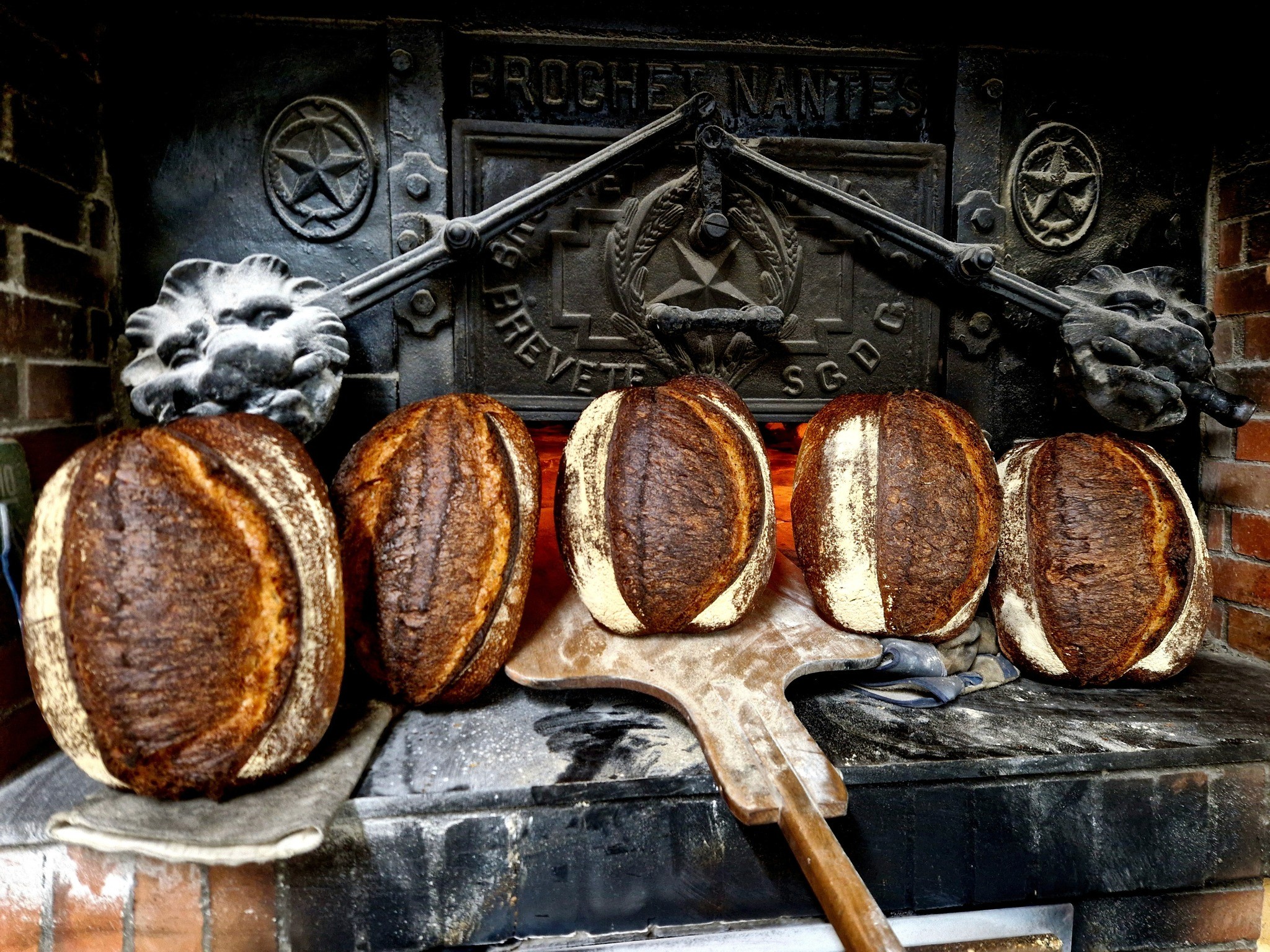
And then there's Marcel's, in Poiroux. Jesus. Fucking. christ. This little bakery produces the best bread I have ever eaten. Sourdough made purely and painstakingly with heritage French wheat varieties in a custom made wood-fired oven, reviving the traditional ways bread has been baked in this region for literall hundreds, if not thousands, of years. It is absurd how good it is. Absurd not least because it’s just a tiny local bakery; open most days, serving the surrounding villages, charging ordinary prices for truly extraordinary bread. If Marcel's existed in London it would have queues around the block from six in the morning, features in the weekend supplements, and a price tag of fifteen pounds a loaf. But here it’s just… normal. Just… bread.
These three places (and the hundreds just like them scattered across the Vendée, and the thousands like them scattered across France) are, on their surface, shops that sell bread and pastry. They are also, I have come to believe, the keystone species of an entire social ecosystem. They are foundational institutions whose presence or absence determines the shape of almost everything else around them: how towns are built, how time is structured, how labour is valued, how people move through space, how communities cohere, and how citizens relate to the economies that feed them.
Start with the bread itself. French bread, properly made, is a living thing. It is leavened slowly, baked fresh, and begins to go stale within hours. Contrary to what Tesco might have you believe, this is not a design flaw. It is the organising principle of an entire way of life, because bread that goes stale by evening means you need to buy bread every day. And buying bread every day means walking or cycling to the bakery; every day, often at lunchtime, sometimes twice. This daily errand, so mundane that it barely registers as an activity, is the first link in a cascade that restructures everything it touches.
Temporality. Because bread demands daily purchase, it imposes a rhythm. The French lunch break (still, in many parts of the country, sacrosanct) exists in part because there is somewhere to walk to and something to buy. The midday departure from work becomes a structural feature of the labour landscape; defended culturally, embedded in habit, resistant to the kind of erosion that has turned the British lunch 'hour' into a fifteen-minute boots mealdeal, scarfed down alone on a park bench or at your desk. The bread creates the rhythm which creates the expectation which becomes a labour norm.
Mobility. You walk to the bakery. Or you cycle. You do not drive to an out-of-town retail park, because there is no need; the thing you require most frequently is within walking distance, by design. This means that French towns are built and maintained and regulated around the assumption of pedestrian movement. Streets are scaled for people. Local commerce clusters around the bakery and the associated shops (the fromagerie, the boucherie, the pharmacie, the tabac) that benefit from the foot traffic it generates. The town centre remains the centre.
Labour and skill. A French baker trains for years, comparable to a doctor. The apprenticeship is rigorous, the craft is respected, and the resulting expertise is skilled, valued, socially legible work. The person who makes your bread is a known individual, a neighbour, someone whose name you know and whose craft you can evaluate daily. The relationship between producer and consumer is direct, human, and predicated on competence rather than convenience.
Waste and consumption. When you buy bread daily, you buy what you need for the day. You see, handle, and evaluate what you're eating. You plan meals around what's fresh and available. The feedback loop between purchase and consumption is tight, visible, and self-correcting. You waste less, because you bought less, because you're coming back tomorrow. The weekly supermarket shop, by contrast, is an exercise in speculative bulk purchasing; you guess what you'll need, buy more than necessary to hedge against uncertainty, and throw away what you don't use.
Community. You see the same people at the bakery. You talk to the baker. You encounter your neighbours in a context that is neither work nor leisure but something in between; a daily, low-stakes social interaction that accumulates, over years, into the texture of community life. The boulangerie is what Ray Oldenburg called a third place, though it predates his concept by several centuries.
None of these effects is dramatic in isolation. Each is small, quotidian, almost invisible. But taken together, they constitute a trophic cascade; a chain of consequences flowing from a single foundational choice about how bread is made and sold. Change the bread, and you change everything downstream.
The French didn't end up with better bread by accident. They protected it; Legally and culturally and institutionally. The Décret Pain of 1993 literally defines what can be called a boulangerie: the bread must be kneaded, shaped, and baked on the premises by the person selling it. There are regulations that protect artisanal production from industrial competition. Local governments (like the one subsidising Luc's pâtisserie in Saint-Hilaire, keeping a world-class craftsman viable in a hamlet that the market would otherwise abandon to seasonal economics) make active choices to sustain these institutions because they understand that the ecosystem depends on them. The boulangerie is treated as a public good rather than merely a commercial enterprise.
*
Which brings us to Britain, and to what happened when we quite pointedly didn’t do that at all.
In 1961, the British Baking Industries Research Association in Chorleywood, Hertfordshire, developed a process for making bread that would transform the country in ways its inventors could never have imagined, and almost certainly never intended. The Chorleywood Bread Process uses high-speed mechanical mixing, chemical oxidants, and hard fats to produce a loaf in under three and a half hours; a process that traditionally took most of a day. The resulting bread is soft, uniform, cheap to produce, and, crucially, shelf-stable. A Chorleywood loaf can be made offsite, shipped to a supermarket, and sit on a on a shelf for days without going stale.
There’s no denying that this solved a problem at the time; post-war Britain needed cheap calories, and the Chorleywood process delivered them with industrial efficiency. But by the 1980s, around 80% of all bread sold in the UK was made this way, and so the bakeries closed and the craft disappeared and the bread moved to the supermarket.
And then the cascade began.
Temporality. Shelf-stable bread means you don't need to buy bread every day. You buy it once a week, along with everything else, in a single large shop. The weekly supermarket run becomes the organising unit of domestic life. The daily rhythm of local commerce (the walk to the bakery, the lunchtime errand, the incidental encounters with neighbours) dissolves into a single, car-dependent expedition to a large retail space on the outskirts of town.
Mobility. The weekly shop requires a car, because you're buying a week's worth of provisions in one go, and the supermarket is too far to walk to because it was built on cheap land at the edge of town, optimised for car access and lorry deliveries rather than pedestrian footfall. Car dependency becomes structural so roads are widened and large scale parking is built. The infrastructure of movement reorganises itself around the assumption that people will drive.
Spatial reorganisation. The high street dies. Not all at once, and not everywhere, but slowly and then very, very quickly. The bakery closes because people buy bread at Tesco. The butcher closes because people buy meat at Tesco. The greengrocer closes because people buy vegetables at Tesco. The foot traffic that sustained the town centre evaporates, and what remains is charity shops, betting shops, and the particular British sadness of a Greggs on every corner. This is, in its own way, the ghost of the boulangerie; a reminder that people still want to buy baked goods on the high street, even if the only option left is an pathetically average sausage roll served under fluorescent lighting.
Meanwhile, on the edge of town, the retail park begets the the out-of-town shopping centre begets the ubiquitous and utterly destesable Barratt homes estate, built to house the people who drive to the retail park, designed around the car because the car is now the only way to get to anything and fuck it, lets do away with pavements while we’e there. The built environment reshapes itself around the supermarket in the same way that the French built environment shapes itself around the bakery. Different keystone species, different ecosystem.
Labour and skill. The supermarket employs shelf-stackers and checkout operators. These are classified as ‘unskilled’ jobs; poorly paid, poorly valued, easily replaceable. The baker's craft (years of training, embodied knowledge, social recognition) is replaced by the factory operative's routine. And when ‘good’ bread does reappear in Britain (as it eventually did, through the artisan baking revival of the 2000s and 2010s), it reappears as a luxury. A sourdough loaf at the ethically questionable Gail’s chain costs £13. The craft that was once universal and quotidian becomes a class signifier; accessible to the urban professional, irrelevant to the community that lost its bakery thirty years ago. Marcel bakes heritage-wheat sourdough in a wood-fired oven and sells it for a few euros to anyone who walks through the door. The same loaf in Bermondsey would require a brand identity, a weekend-supplement profile, and a price point that would make Marcel laugh.
Waste and consumption. The weekly shop generates waste by design. You buy speculatively, in bulk, guided by promotions and package sizes rather than daily need. The feedback loop between purchase and consumption stretches to a week, becomes blurry, and ultimately fills the fridge with things that will end up in the bin. Food waste in Britain is staggering, and while bread is far from the only cause, the underlying pattern (buy more than you need because you won't be back for a week) is the Chorleywood logic applied to every category of consumption.
I am sure this sounds recognisable to you, whatever your side of the channel, if it is a little simplified; of course the French food system has its own problems, and British communities have found other ways to cohere. But the structural comparison holds because the cascade is real. A single decision about how bread is produced (slowly and locally, or quickly and industrially) propagates through temporality, mobility, spatial organisation, labour, consumption, community, and class in ways that eventually produce two recognisably different societies.
The bread is the wolf. Everything else is the river.
*
You can see where this is going. The internet had its boulangerie period; the early web (let's say roughly 1995 to 2005) was structurally analogous to the French bread economy. It was local, distributed, human-scale, and organised around craft. Websites were made by individuals or small groups who understood what they were building. Blogs unfolded slowly, over weeks and months. Discovery happened through word of mouth, hyperlinks, and genuine social recommendation. You visited sites daily, the way you'd visit a bakery; because there was something fresh, because the visit itself was part of the rhythm. The people who made the things you consumed were visible, named, and reachable. The relationship between producer and consumer was direct.
Then came the Chorleywood moment.
Web 2.0 (a term I've always disliked, but which has the virtue of marking a real rupture) was the point at which someone worked out how to make connection shelf-stable and distributable at scale. The platforms (Facebook, Twitter, YouTube, and later Instagram, TikTok, and the rest) did to digital communication what the Chorleywood process did to bread. They took something that had been local, perishable, and craft-produced, and they made it industrial: uniform, persistent, cheap to distribute, and optimised for volume rather than quality.
The cascade follows the same logic, through the same domains:
Temporality. The blogosphere demanded daily visits, the way the boulangerie demands a daily walk. Content was fresh, and you engaged with it when it was made, because that was when it mattered. Platform content is Chorleywood bread: engineered for persistence, algorithmically resurfaced regardless of when it was produced, decoupled from any natural rhythm of creation and consumption. The feed doesn't care when something was made. It serves you whatever maximises engagement, which severs the connection between the moment of making and the moment of encounter, just like shelf-stable bread. You're no longer visiting a baker who made something this morning. You're rummaging through a supermarket shelf stacked with items of indeterminate age, selected by an algorithm whose interests are not yours. This sounds counter-intuitive in the world of social-media, but look how much things have shifted away from topical and timely towards brainrot over the last few years alone. Look at TikTok or Instagram or Facebook or Reddit and the content is increasingly regurgitated and stale.
Spatial reorganisation. The platforms did to the digital landscape what the supermarket did to the high street. They moved social and intellectual life from distributed, independently owned spaces (blogs, forums, personal websites) to enormous centralised complexes optimised for throughput and extraction. The digital high street died for the same reason the physical one did: the new infrastructure made it seem redundant, while quietly destroying the secondary functions (community, serendipity, genuine encounter) that had been its actual value. The personal blog is the digital equivalent of the town bakery; still possible, still occasionally excellent, but structurally disadvantaged by an ecosystem that routes all traffic through the supermarket.
Labour and skill. On the early web, producing content required craft. You had to know things, think carefully, write well enough to hold attention without algorithmic assistance. The platform economy, like the supermarket, is optimised for what gets classified as 'unskilled' production: content creation as volume play, engagement as the only metric, the creative act reduced to something that can be done quickly and in bulk. And when genuine craft does appear on platforms, it exists in the same relation to the feed that artisan sourdough has to a Chorleywood loaf; visible, occasionally celebrated, but structurally precarious and increasingly repackaged as a luxury (behind paywalls, on Substack, in the paid tier).
The slop crisis.. AI-generated content is Chorleywood bread perfected; the grey goo of the digital ecosystem in that it is technically competent, semantically empty, designed to fill space and capture attention without offering anything of substance. It is the logical endpoint of optimising for volume, shelf-stability, and cost efficiency at the expense of everything else. Slop is what you get when the Chorleywood logic is applied to knowledge itself: industrially produced filler that looks, at first glance, like real content but dissolves into nothing when you try to engage with it. The person doing careful, thoughtful, genuinely insightful work now finds themselves competing for attention against an ocean of the stuff; and the ocean is rising faster than anyone can swim.
I made this argument at length in my end of 2025 piece, but I think the bread comparison adds a sense of the mechanism that was maybe missing when I wrote it. The slop crisis isn't an accident, and it isn't simply the result of new technology being misused; It's a trophic cascade. It flows inevitably from the foundational decision to optimise digital infrastructure for scale, persistence, and centralised distribution rather than for freshness, locality, and craft. The Chorleywood process restructured British society as much as it made shitty bread, the same way that Platform architecture restructured the conditions under which knowledge is created, distributed, and consumed. As well as shitty content.
The platform architecture is the wolf. Everything else is the river.
*
So here is the question: if the boulangerie model is so obviously superior for communities, for craft, for health and for democratic life, why doesn't the digital equivalent simply… exist? Why can't we just build digital boulangeries and let people walk to them every morning?
The answer is that it's illegal. Or rather: the specific act of taking the ingredients of your own digital life and combining them in ways that compete with the industrial product has been criminalised.
Under anti-circumvention law (Section 1201 of the US Digital Millennium Copyright Act of 1998, and Article 6 of the EU Copyright Directive of 2001), it is a criminal offence to modify the functioning of a digital product or service without the manufacturer's approval. As Cory Doctorow puts it, this is 'felony contempt of business model.' If a manufacturer places even the flimsiest technical measure on their product to prevent modification, bypassing that measure is a jailable offence; and so is disclosing how it might be bypassed, which means, among other things, that security researchers face criminal liability for describing defects in products that millions of people depend on.
Every country in the world has enacted some version of anti-circumvention law, and in almost every case the mechanism was identical; that is, the United States Trade Representative made it a condition of trade agreements. Australia got its law through the US-Australia Free Trade Agreement. Canada and Mexico got theirs through USMCA. Central American nations got theirs through CAFTA. A former information minister of a Central American country told Doctorow directly: the Americans said they would refuse to take our coffee unless we gave them anti-circumvention. The alternative to criminalising digital self-determination was economic collapse.
This is the law that killed the digital bakery. To understand why, consider what the Décret Pain of 1993 actually does. It legally defines what can call itself a boulangerie: the bread must be kneaded, shaped, and baked on the premises by the person selling it. It protects a specific mode of production (local, craft-based, human-scale) against the pressures of industrial competition. It says: this kind of institution matters, and we will use the force of law to ensure it survives.
Anti-circumvention law is the exact inverse. It protects the industrial mode of production against competition from craft. It says: you may not knead, shape, or bake your own digital bread. You must accept the pre-packaged product from the manufacturer, and you are forbidden from modifying it, improving it, or making something better from its ingredients. If Apple charges a 30% commission on every transaction that passes through its App Store (a toll that generates roughly $100 billion annually), you may not build a tool that lets merchants and consumers bypass that toll. If John Deere booby-traps its tractors so that replacing a part requires a $200 service call to type an unlock code, you may not write the software that removes the trap. If Medtronic rigs its ventilators to refuse replacement parts until a cryptographic handshake confirms that an authorised (and expensive) technician performed the repair, you may not circumvent that lock; even during a pandemic, even when people are dying.
The Décret Pain created the conditions for the boulangerie to survive. Anti-circumvention law created the conditions for the digital supermarket to become inescapable.
If you work in policy (hire me) then this is the part to which I hope you are paying attention: Europe did this to itself, at America's insistence, to protect American companies' ability to extract value from European citizens. The EU enacted Article 6 of the Copyright Directive in 2001, extending legal protection to the same companies that Macron now identifies as the threat to European sovereignty. Europe is enforcing a legal framework that prevents it from doing digitally what it already does with bread.
The platform architecture is the wolf. Everything else is the river.
*
Which brings us back to Macron, and to the question of what digital sovereignty actually requires.
Macron's instincts are right. France's cultural reflex to resist American monoculture, to protect local production, to insist on craft and human-scale exchange are sound instincts, and they are visibly at work in the raid on X's offices, in the enforcement of the Digital Services Act and in the sharp rhetoric about vassalage and sovereignty. France understands, at a deep institutional level, that the way things are produced matters as much as what is produced. That is the lesson of the boulangerie, and it is a lesson that most of the anglophone world has forgotten.
But Macron's execution risks missing the point. The €109 billion AI investment package, positioned as France's answer to America's Stargate project, is an attempt to compete with the Chorleywood process on its own terms; that is, it is an attempt to build a French factory that can produce shelf-stable digital bread at a scale that rivals the American one.
This is the wrong lesson to take from the boulangerie. The boulangerie does not compete with the supermarket by being a bigger supermarket. It competes by being a fundamentally different kind of institution, operating on different values, at a different scale, embedded in a different set of social and legal relations.
What France needs, what Europe needs, is a Décret Numérique: a legal and institutional framework that protects the conditions under which digital craft can survive against the relentless pressure of industrial-scale extraction. The first and most essential step is the repeal of anti-circumvention law.
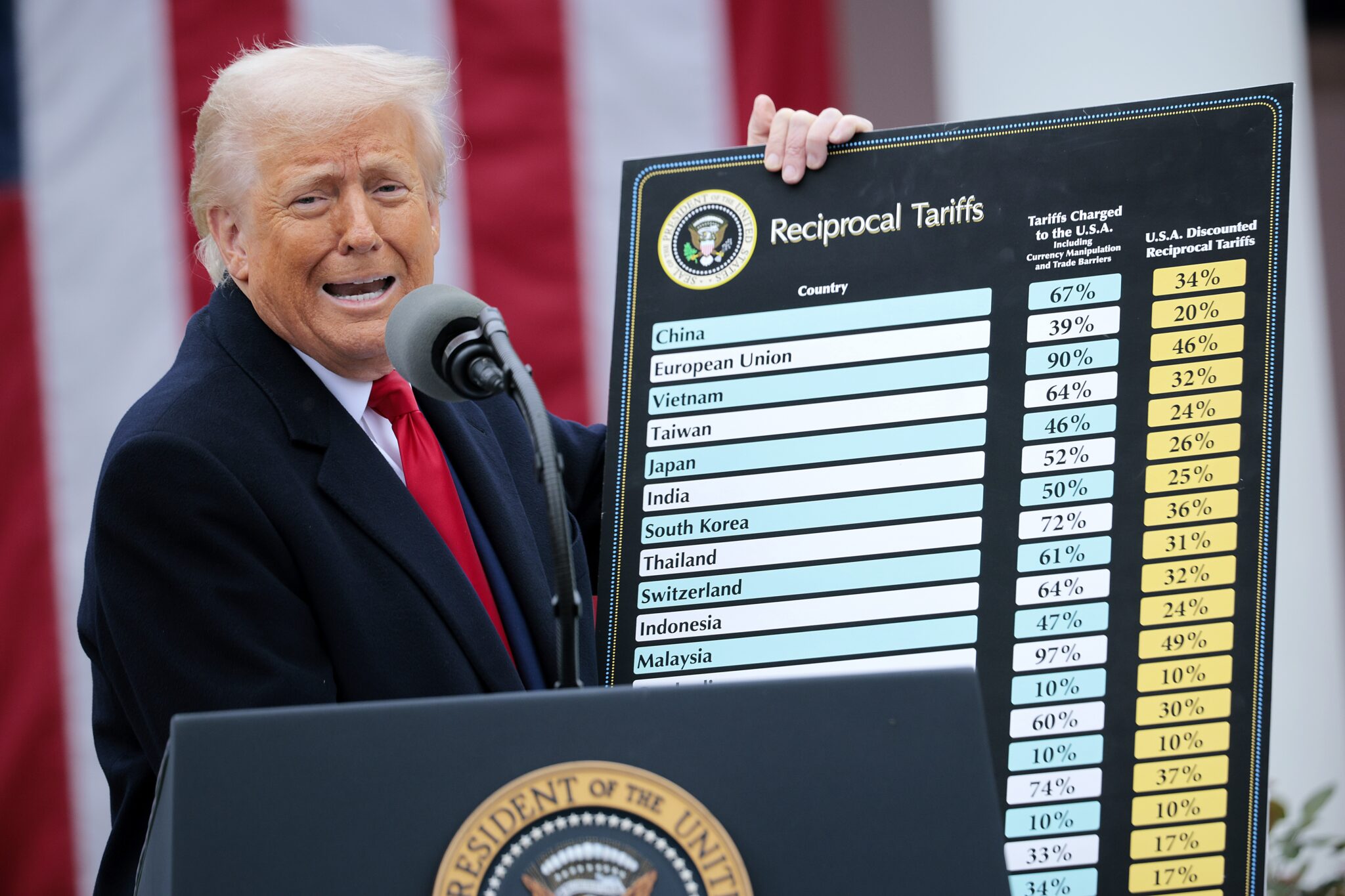
This is where Trump, of all people, inadvertently helps. The trade leverage that America used to impose anti-circumvention on the rest of the world has been destroyed by its own architect's successors. If someone threatens to burn your house down unless you follow their orders, and they burn your house down anyway, you don't have to keep following their orders. The tariffs have arrived regardless. The coercive logic that made anti-circumvention law a condition of trade has collapsed. There has never been a better moment for Europe to repeal Article 6 and legalise the digital boulangerie.
Imagine what that would look like. A European company could reverse-engineer Apple's bootloaders and produce a tool that lets consumers use alternative app stores; stores that charge a fraction of Apple's 30% toll, returning value to European developers and merchants. A Finnish startup could sell that tool to anyone in the world with an internet connection. A Polish security firm could publish research on deliberately defective train software without being sued for telling the truth (as Dragon Sector, the hackers who exposed the Newag locomotive scandal, are currently being sued). A French cooperative could build the interoperability tools that allow businesses and governments to migrate their data out of American cloud services; the adversarial interoperability that are essential to any serious Euro Stack project.
None of this requires €109 billion in AI infrastructure spending. It requires a legal change; the removal of a law that Europe adopted under coercion, that serves American interests at European expense, and that criminalises precisely the kind of local, craft-based, human-scale digital production that France already knows how to protect in every other domain of life.
The boulangerie endures in France because France decided it mattered enough to protect. The open web, the protocol-based internet, the distributed digital commons; these were the boulangeries of our information ecosystem, and we let them be destroyed because we did not extend them the same protection. We let the Chorleywood process happen to the internet and then expressed surprise when the high street died, when community evaporated, when the bread started tasting of nothing.
I’ve addressed this at France because, unfortunately, Britain has already decided to do to its digital infrastructure precisely what it did to its bread. While Macron raids Twitter’s offices, declares American platform free speech to be 'pure bullshit,' champions European digital sovereignty, and (for all his faults, and there are many) at least has the political vocabulary to articulate what is at stake, the Starmer government has taken an approach that can only be described as enthusiastic capitulation. The UK's AI strategy, published in early 2025, promised to 'mainline AI into the veins of this enterprising nation' (a phrase so grotesque I audibly groaned when I wrote it down just then) and to remove the 'blockers' that were 'getting in the way of growth in this sector.' In practice, this has meant courting US investment with an eagerness that borders on the supine. During Trump's state visit, American tech firms committed billions to Britain's AI future; deals that critics pointed out would deepen the UK's already massive dependence on US platforms and infrastructure. The Ada Lovelace Institute warned that the arrangements risked 'technological lock-in,' while Nick Clegg (himself a former Meta executive, which gives the observation a certain je ne sais quoi) described British tech prowess as 'defanged' by arrangements that amounted to Silicon Valley's 'sloppy seconds.'
Starmer has since pledged that Britain will become 'an AI maker, not an AI taker.' But this rings hollow when the government's actual policy amounts to inviting American companies to build AI infrastructure on British soil with British data, while simultaneously failing to produce any AI legislation at all (promised for 2025, delayed to 2026, still absent at the time of writing), and while its AI skills programme has been criticised for training British workers to be competent users of American tools rather than builders of sovereign alternatives. One group of academics and specialists wrote that the approach 'betrays UK workers and our digital sovereignty,' with economic value flowing to Silicon Valley while the UK provides the labour and the data. Denmark is ejecting Microsoft from its public services, Germany is investing in its own AI defence capabilities, France has Mistral; Britain has a promissory note and a press release about mainlining AI into its veins.
I do not share Macron's politics, and I am well aware that much of his digital sovereignty rhetoric serves French industrial interests as much as it serves democratic principle. But I will grudgingly admit that he is at least fighting on the right terrain, while Starmer hasn’t fought at all. He is welcoming the supermarket with open arms, handing it the keys to the high street, and calling it growth. The country that gave the world the Chorleywood process is, with a kind of tragic consistency, applying the same logic to its digital future: optimise for scale, invite in the industrial producers, accept that the local bakery was never going to compete, and pretend the resulting convenience is the same thing as prosperity.
Any British person who has spent time in France and experienced the bread ecosystem undergoes a culinary petit mort and then a slightly larger damascene conversion, prompted by the question ‘why don’t we have this at home?’ It’s a sudden, visceral understanding that things could be otherwise, that the way we live is not inevitable but chosen, and that the choice was made badly. It would be nice if that conversion could happen digitally. For the moment, at least, it will not be happening in Westminster.
*
There is a scene that plays out every morning in Longeville-sur-Mer, as it does in every small town in France. I walk to Les Petits Pains. I point at the apple crumble tart. The woman behind the counter smiles, because she already knew. I take my pain de campagne and my coffee and the frankly excessive amount of cake and I walk back through streets that are quiet, and scaled for walking, and lined with small shops that exist because people walk past them every day on the way to buy bread.
It is an unremarkable scene. It is also, I have come to believe, a model for the kind of digital life we should be building; one organised around freshness rather than shelf-stability, craft rather than volume, locality rather than scale, daily human exchange rather than algorithmic intermediation. An internet of boulangeries rather than supermarkets. An internet where a Marcel or a Luc can do extraordinary work in a small place, sustained by an ecosystem that values craft, supported by institutions that understand what's worth protecting.
Macron is right that France cannot afford to be a vassal of American technology, but he is looking for sovereignty in the wrong place. The €109 billion buys compute but it does not buy an ecosystem. The raid on Twitter’s offices enforces compliance but It does not build an alternative. The rhetoric about European preference is stirring but It is not, on its own, a policy.
The policy is already there, baked (ha!) into the institutional DNA of French life. Protect the conditions for craft. Define what counts as genuine production. Remove the legal barriers that criminalise competition with industrial monopoly. Let people bake their own bread.
France knows how to do this. It has known for centuries. It simply hasn't yet recognised that the principle applies beyond flour.
The wolves changed the rivers by existing. The boulangerie changed France by existing. The question for Macron, and for Europe, is whether they are willing to let the digital boulangerie exist too; to remove the laws that forbid it, to protect the conditions that sustain it, and to trust that the cascade will do the rest.
The bread already contains the answer. Someone should tell the president.