RESEARCHING FINTECH: PAYDAY PROXIMITY
March 2025
Live Preview
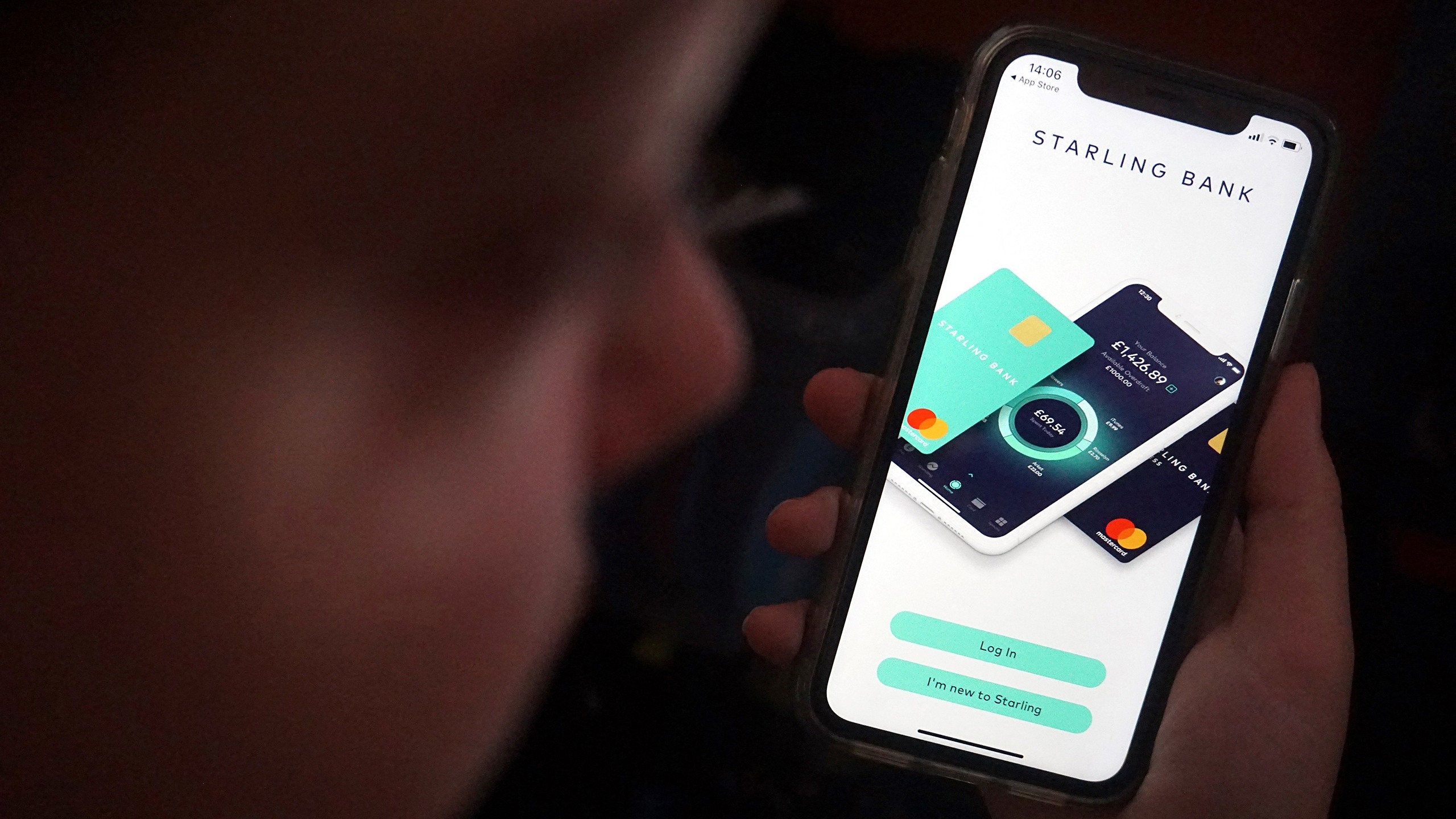
Starling asked how they should show up on TikTok in a crowded, high-spend fintech market. The research revealed something unexpected: the same platform serves as both the primary source of financial education for our audience and the place they go to avoid thinking about money entirely. The strategic breakthrough came from academic research into payday proximity, which affects not just what we buy, but how we eat, how we socialise, and (most remarkably) our cognitive capacity itself. Financial scarcity consumes mental bandwidth equivalent to a full night's lost sleep. The recommendation: restructure Starling's entire social presence around the payday cycle, concentrating content when the audience most needs support and has the capacity to act on it.
The Brief
Sometimes a brief arrives that seems almost too neat. Starling Bank has a proposition I genuinely admire: anyone can be good with money. It's democratic without being patronising, optimistic without being naive. The question they brought to us was straightforward enough: how should they show up on social media; particularly TikTok, where competitors were spending heavily and the audience skews young and financially anxious?
But strong propositions have a way of generating uncomfortable questions. If anyone can be good with money, why aren't they already? What's stopping them?
This is where most social media briefs would pivot to content pillars and posting cadences. I wanted to stay with the discomfort a little longer.
The Dual Life of TikTok
The research surfaced something I'd half-suspected but hadn't seen articulated so starkly. For Starling's target audience (25-44, digitally native, seeking control over their finances), TikTok has largely replaced Google as the primary information-gathering platform. More than half now start their research there rather than in a search bar. When they’re looking for financial advice and inspiration, TikTok is where they go. So far so good.
What’s interesting is that the opposite is also true; when financial anxiety peaks, this audience uses it to not think about money at all. The endless scroll becomes anaesthetic. The algorithm replays and deepens that by serving comfort content, which is to say, distraction.
TikTok is simultaneously the place you go to get your finances in order and the place you go to forget you ever had to. Sometimes it's hard to tell which mode you're in. The platform's genius (and its danger) is that both feel productive.
This speaks to something larger about digital financial behaviour. We found that social proof now drives major financial decisions; from choosing banks to making large purchases, people look to what others appear to be doing. But social media systematically distorts that signal. The comparison trap isn't new, but it's never been so efficiently delivered. People misjudge what their peers can actually afford, feel pressure to match lifestyles that may be debt-fuelled fictions, and make purchasing decisions based on performances of wealth rather than genuine financial health.
The phrase I kept returning to in the research: financial decisions based on social fiction. Our audience is already making passive financial choices shaped by digital influence. They just don't recognise it as influence.
Finding the Rhythm
So if TikTok is the place you go to actively engage with financial content but also the place you go to avoid it, how on earth do finance brands know what messaging is right and when? The strategic question shifted to a new space: how do you interrupt when people are in the passive headspace, or encourage when they're in the active one? More to the point, how could we possibly know which headspace our audience is in at any time, and do that reliably and at scale? The answer here is likely obvious; since a users financial condition defines their particular social needstate, then Payday becomes the pivot point. Research showed us that where a user was in relation to payday played an enormous role in how they used TikTok, so by taking an approach that centralised payday, we could make sure we were in line with our audiences needs.
But what if we could push this further?
What if, instead of just marketing, we really wanted to actually create the conditions for active financial decision-making in an environment optimised for distraction?
Payday isn't a new concept in financial marketing. Brands acknowledge it constantly, but the acknowledgment is usually shallow: a visual of coins, perhaps, or some vague ‘treat yo’self’ messaging around the end of the month. What struck me in the research was how profoundly payday proximity shapes behaviour in ways that extend far beyond the obviousness of spending patterns and begins to dip a toe in some of the biggest issues affecting our target audience today, in ways that they likely have no idea about.
The academic literature here is genuinely fascinating, and almost entirely ignored by the financial services industry. I could talk for hours about this, but in the interest of your time and mine, here’s a snapshot of what I found.
Start with consumption. Proximity to payday changes not just what we buy but why we buy it. In the days after getting paid, spending is aspirational; we buy things that signal who we want to become and are often subconsciously investments in our future selves. As the month wears on, spending becomes defensive; we buy to maintain and cope, to ‘get through’ to the next cash injection. The same purchase (a new shirt, say) carries entirely different psychological weight depending on when in the cycle it occurs.
It changes what we eat. After payday, we're significantly more likely to buy fresh ingredients; we’re more likely to cook from scratch and to eat out at restaurants. As money tightens, we shift to frozen meals, processed food, cheaper calories. One study found that meals themselves take longer to eat in the days after payday; we savour them differently, experience them as small celebrations rather than just fuel.
It changes what we watch. Entertainment choices shift from active engagement (going to the cinema, trying new releases) toward passive consumption (rewatching familiar comfort content, free platforms). The algorithm notices and adjusts accordingly; your TikTok feed in week four of the month looks meaningfully different from week one, because your engagement patterns have changed.
It changes how we relate to other people. Social participation measurably decreases as the month progresses. We're less likely to accept invitations, less likely to suggest plans, less likely to engage in activities that might involve spending. The withdrawal is often unconscious; we don't think "I can't afford to see friends this week," we simply feel less social. The financial constraint expresses itself as a shift in mood or desire for company.
The thing that really got me was this; It changes our brains.
The research on scarcity-induced cognitive load (Mullainathan and Shafir's work on this is essential) demonstrates something profound: financial scarcity doesn't just limit what we can afford; it limits what we can think. When resources are scarce, the mind allocates disproportionate bandwidth to managing that scarcity. The result is a measurable reduction in cognitive capacity for everything else.
In practical marketing terms: the week before payday, your audience is literally less capable of complex decision-making than the week after. Not because they're less intelligent, not because they're less motivated, but because a portion of their mental bandwidth is consumed by the background hum of financial anxiety. They quite literally have fewer cognitive resources available for processing new information or for planning ahead.
I am not talking about metaphor. It's not 'they feel a bit stressed.' Studies show the cognitive impact of financial scarcity is equivalent to losing a full night's sleep, or approximately 13-14 IQ points (if you buy into that sort of thing). The same person, in the same circumstances, will perform measurably worse on unrelated cognitive tasks when they're operating under financial strain.
Think about what this means for how we've been approaching financial marketing. We've been serving our most complex, decision-heavy content (comparison tools, switching guides, long-term planning frameworks) with no regard for whether the audience has the cognitive bandwidth to process it. Worse: we've often served it precisely when people are least equipped to engage with it; because that's when they're searching for financial help.
It's like trying to teach someone to swim while they're drowning.
The Strategic Intervention
This reframing changes everything about what "meeting customers where they are" actually means. forget channel presence or tone of voice, and aim for understanding that your audience's capacity for engagement fluctuates on a predictable rhythm, and you should be designing your communication to work with that rhythm rather than against it.
The recommendation was a fundamental restructuring of how Starling thinks about social content: not as a steady stream of messaging, but as a cycle calibrated to the financial rhythm of their audience's lives.
The week before payday (40% of monthly content volume): this is when anxiety peaks and the temptation to scroll into distraction is highest. Meet it directly. Solidarity messaging; acknowledgment of the struggle rather than aspiration porn. Practical hacks and tips. The tone is "we get it" rather than "here's how to be better."
The week after payday (50% of monthly content volume): this is when the "fresh start effect" is strongest; that psychological phenomenon where temporal landmarks (new years, new months, paydays) create motivation for behaviour change. Optimism and forward-planning content. Goal-setting. Harnessing the energy rather than dampening it.
The rest of the month (10% of monthly content volume): maintenance mode. Lower-key community building, user-generated content, responsive engagement. The brand steps back because the audience needs space.
This dovetails nicely with what we know about algorithmic strategy. TikTok rewards emotional engagement, and the payday cycle creates predictable emotional peaks. High-emotion periods justify increased posting frequency without appearing spammy. And unlike trend-chasing, which is inherently reactive, the payday rhythm is reliable; it happens every month, and you can plan for it.
What Makes This Different
Plenty of financial brands mention payday. None have structured their entire social presence around it.
Starling's proposition, that anyone can be good with money, implies meeting people where they actually are, not where we wish they were. The payday-proximity framework does exactly that: it acknowledges the reality that financial capability isn't just about knowledge or willpower, but about cognitive bandwidth that fluctuates predictably based on material circumstances.
It's also, importantly, genuinely useful. Not useful in the way brands usually mean when they say that ("we made a calculator!"), but useful in the sense of providing relevant support at the moments when support is most needed and most likely to be acted upon.
The differentiation isn't that Starling talks about money. It's that Starling understands the rhythm of how money actually feels.
This research was conducted for Starling Bank in 2024 as part of a broader social media strategy engagement.