WTF IS GALAXY AI: LAUNCHING THE S25
November 2024
Live Preview
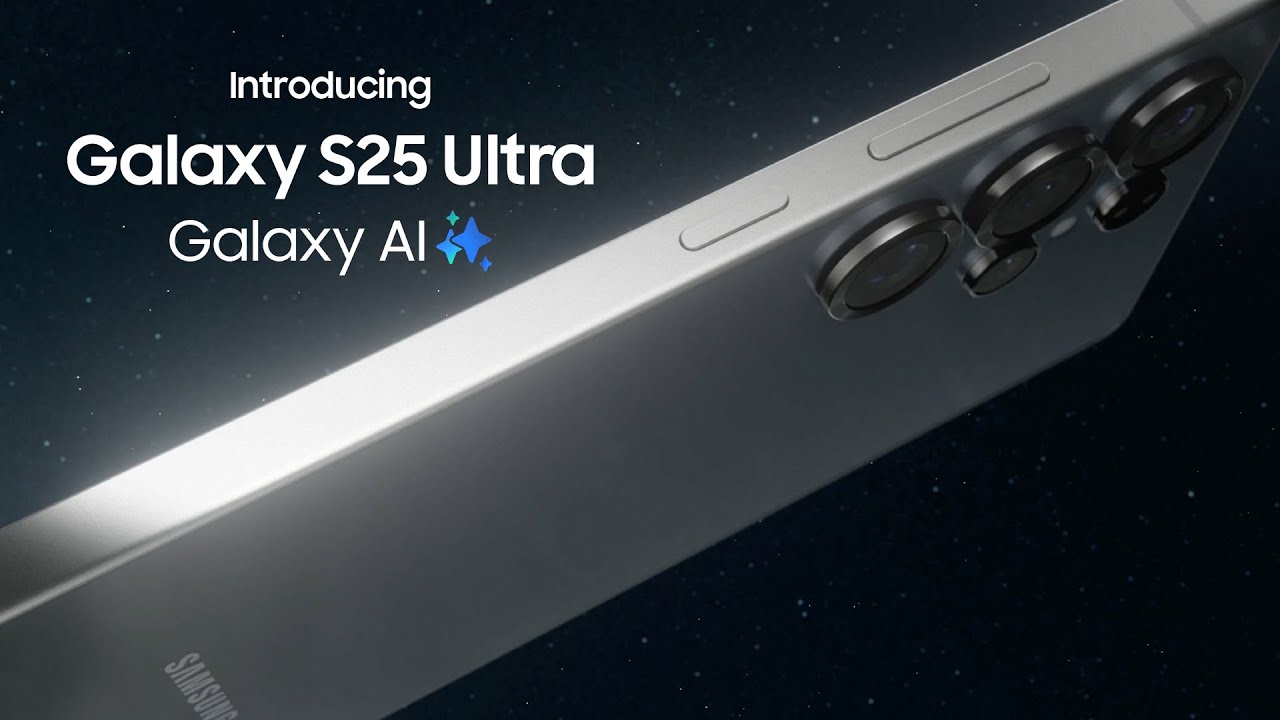
Samsung's marketing teams were struggling to articulate what Galaxy AI actually was; defaulting to familiar language around productivity and power without clarity on what that meant in practice and in the context of the launch of a flagship mobile device. Through ethnographic research, I identified a fundamental reframe: the value of generative AI isn't in what it produces (outputs) but in how you interact with it (inputs). For the first time in computing history, natural language outperforms technical fluency; which means the skills that made someone "good with technology" are now obstacles, not advantages. This insight shifted Samsung's communications strategy away from feature demonstration toward something more resonant: the end of the era in which humans had to think like machines.
The Brief
Galaxy AI was Samsung’s shiny new multimodal assistant, and their entry into the generative AI race. Unsurprisingly, this was the key selling point of their new S25 device, so they were pulling out all the stops for a big launch. The brief: drive awareness and adoption, with a particular focus on women. This last part was interesting; research consistently shows that women report lower confidence with technology, feel more excluded from tech industry narratives, and are more likely to describe their relationship with devices as functional rather than enthusiastic. If Samsung could crack this audience, they'd have found something genuinely differentiating and would open up massive revenue opportunities on a global scale.
Before we could address how to market Galaxy AI, it became very clear that we had to confront a more fundamental issue: Samsung's own teams weren't entirely sure what they were selling.
The internal conversations circled around familiar territory. Productivity. Power. Supercharging user abilities. This is the default register of consumer technology marketing. But when pressed on specifics, things got hazy. Supercharging which abilities, exactly? The answers tended toward the abstract or the demo-ready: translation, photo search, document summaries. All true, but none of it cohering into a proposition that felt meaningfully different from competitors.
The problem wasn't that Galaxy AI lacked features. It was that the features were being described in a language that didn't capture what was actually new about them.
The Gender Politics of Your Mobile Phone
The ethnographic research surfaced something more interesting than simple resistance. Women's relationship with AI technology was characterised by a subtle form of alienation.
Questions about AI usage elicited responses that were complex, often contradictory, and revealed significant tension between practical benefits and personal identity. Women weren't rejecting AI tools; many used them regularly. But they described feeling excluded from the conversation about what these tools were for, who they were designed for, and what future they were building toward.
"I definitely think AI tools should acknowledge their limitations," one participant (a senior UX designer) told us. "But I also think it's very hard for AI campaigns to seem sincere, because a lot of the time it does just seem like it's trying to sell us a utopian future."
This wasn't technophobia in the sense we usually understand it; rather it was aesthetic and political dissatisfaction. The AI narrative; the breathless hype, the Silicon Valley futurism, the implicit assumption that more automation is always progress, was consistently exclusionary and often felt like someone else's story.
The research showed that Samsung’s "productivity and power" framing went beyond vagueness and actively reproduced the narrative that alienated this audience. More power. More output. More optimisation. This is the language of a tech industry talking to itself, not to people,especially women, trying to navigate actual lives.
The History of Thinking Like a Machine
To find a way through, I needed to think about what "being good with technology" has actually meant.
Every technological revolution creates its own priesthood. The people who understand the machines, who speak their language, who can translate between human intention and computational execution. For decades, "being good with technology" meant exactly this: the ability to think like a computer so that computers would do what you wanted.
Every interface in computing history has required humans to adapt to machines. Command lines demanded alien syntax. GUIs required understanding file hierarchies. Even internet search created new literacies: effective Googling meant understanding how search engines parsed queries.
There’s a story I’ve been telling for years about semantic search and the difference between my parents and me; I find it’s a good way to explain machine readability and search. Let’s pretend for a moment that my family are all looking for some information about a hotel we stayed in once.
My search looks something like this: "Hilton Paris".
Why do I search like this? I know, instinctively, that search engines match keywords, that word order matters (searching "Paris Hilton" returns something VERY different) and that natural language is noise the algorithm has to work around.
My mum, TO THIS DAY, will type something like this: "What was that fancy hotel we stayed at in Paris last summer with the nice view?" Obviously this approach to googling gets her nowhere; it has no grasp of keywords and is informationally noisy.
For twenty-five years, the first approach was objectively more effective. It is the essence of computer literacy; the ability to translate yourself into terms a computer could process. What this creates is a hierarchy between those who could translate fluently at the top and those who couldn't struggling to make technology work for them. I know this because inevitably my Mum will call me to show her how to use Google when she can’t find what she needs.
Oh how the tables have turned. For the first time in computing history, natural language queries don't just work. They work better.
In a very real sense, my Mum is now better than I am at finding the information she wants. Her search query now returns more useful results than my technical search. The additional context; "fancy," "last summer," "nice view"; gives the AI more to work with. The "noise" of natural language has become signal.
This is a complete inversion of fifty years of human-computer interaction. The cognitive burden of translation finally shifts from human to machine. In other words, this is the first technological revolution in history where existing tech fluency is a hindrance rather than a help.
The Curse of Competence
The implications to this are pretty profound. People like me, who have spent decades learning to think like machines, now have to unlearn those habits. The instinct to strip queries down to keywords, to avoid "unnecessary" context, is now counterproductive in a world of AI powered search.
Meanwhile, people who never fully adapted to machine logic and who always found it alienating, those people who asked questions the "wrong" way or included too much context, suddenly find that technology works the way they always thought it should.
This reframes AI adoption entirely. The barrier isn't technical complexity. It's unlearning. And the people with the most to unlearn are precisely those who were most successful under the old paradigm.
This inversion is gnuinely significant for gendered approaches to technology. Research shows that women are more likely to describe feeling like technology "isn't for them" and therefore are more likely to have opted out of the fluency competition; the game they declined to play is becoming obsolete. Women are at an advantage in an AI powered world.
Inputs, Not Outputs
This is where I pushed Samsung to fundamentally reframe their thinking.
The internal conversation had been stuck on outputs. What can Galaxy AI produce? Translations. Summaries. Image edits. The phone as a factory for generated content, with AI as the machinery that makes production faster.
But the research suggested the real shift wasn't about outputs at all. It was about inputs, that is, how you interact with the technology, not what it can produce. The revolutionary thing about Galaxy AI is that you could finally talk to your phone like a human being and have it understand you. An outputs framing naturally leads toward feature demonstration. "Look what Galaxy AI can do." The user is positioned as a recipient of AI capability.
An inputs framing centres the user's experience of interaction. The feeling of being understood. The relief of not having to translate yourself into machine-legible terms. The simple pleasure of asking for what you want in your own words.
The first framing is about AI as a tool. The second is about AI as a relationship.
And crucially, the second framing resolves the alienation problem. Women in our research weren't alienated by AI's capabilities; they were alienated by a narrative that positioned AI as a productivity arms race they hadn't signed up for. An inputs framing sidesteps this entirely. It's not about being more productive or more powerful. It's about technology finally working the way you always felt it should.
Samsung devices are infamous for their mindbogglingly complex menu structures and hidden features that require knowledge and experience to activate; this is by far the biggest barrier to switching from that other brand with the fruity name. The idea of having to learn a new ecosystem makes switching a hassle, but get this right and the world’s most infuriatingly complex mobile devices are suddenly easier to use than the ones famous for the quality of their UI/UX. This has profound implications for the market.
There are obvious concerns here around the anthropomorphisation of technology; its important we don’t accidentally imbue Galaxy AI with qualities that it doesn’t have. I’ve written extensively on this as an issue. But get this right, and it has enormous impacts on the way audiences think about products.
The Opportunity
Samsung had a chance to own a genuinely new narrative about AI.
The dominant framing positions AI as an amplifier: the already-productive become more productive, the already-capable become more capable. AI as accelerant, widening gaps.
Galaxy AI suggested a different story. AI as equaliser. Technology that finally stops demanding humans meet it halfway.
For decades, we've talked about the digital divide as a gap between those with access and those without. But there's always been another divide: between those who could fluently translate themselves into machine-legible terms and those who found that translation alienating. Generative AI has the potential to close that second divide entirely.
The strategic opportunity: don't sell AI as the next step in a technological arms race. Sell it as the end of an era in which technological progress meant humans perpetually adapting to machines.
The revolution isn't that AI can do more. It's that you no longer have to think like a computer to use one.
This research was conducted for Samsung UK in 2024 as part of ongoing social and brand strategy.